
Hey, just so you know, some of the links on this site are affiliate links. That means I may earn a small commission if you buy something through them. It doesn’t cost you anything extra, and it helps me keep this site running. Thanks for your support!
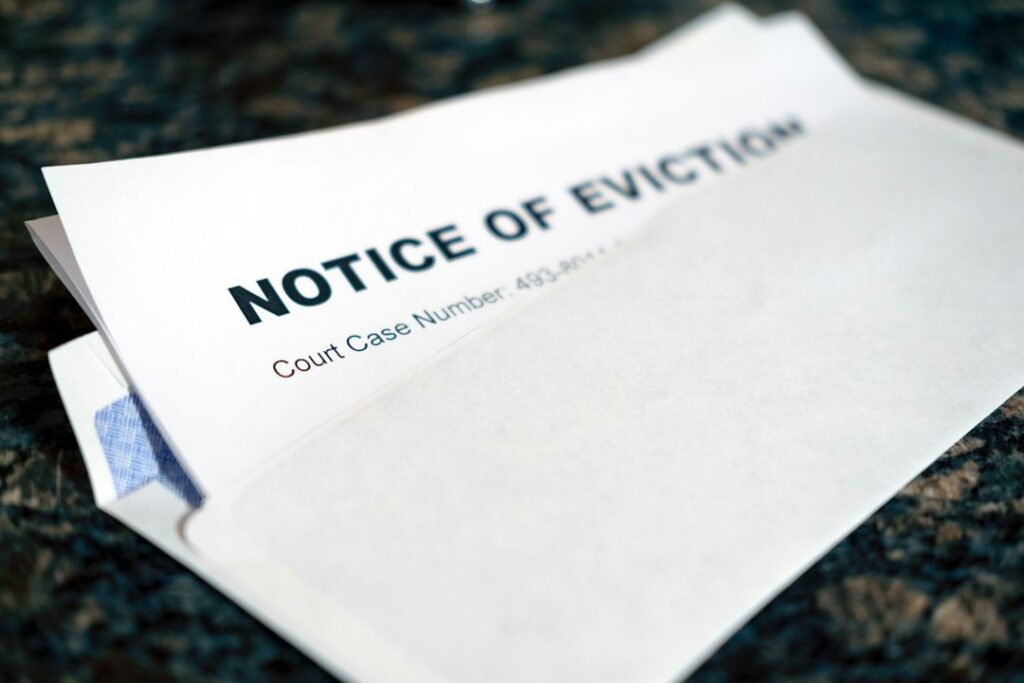
An eviction filing is not the same thing as a completed eviction. A filing means a landlord has started a court case seeking to remove a tenant or enforce a lease-related claim. The case can end in several ways, and some tenants remain in their homes after the filing.
What is an eviction filing?
Eviction Lab defines an eviction filing as the result of a landlord filing a case in court to have a tenant removed from a property. In its datasets, the filing count is based on cases with a first recorded action during the measured year.
A filing records the beginning of a formal legal process—not its final outcome.
What can happen after a filing?
Depending on the jurisdiction and facts, a case may result in:
- payment or settlement;
- dismissal;
- a tenant moving voluntarily;
- a judgment for possession;
- a negotiated agreement;
- another filing later; or
- physical removal after the required legal process.
The terminology and procedure differ across states and local courts.
Why eviction datasets often focus on filings
Filings are useful because they are observable court events and capture the moment a household is formally threatened with displacement. They can therefore reveal housing instability even when no physical removal occurs.
But filing counts can exceed the number of households involved because the same household can receive multiple cases.
What is a households-threatened rate?
Eviction Lab created the households-threatened rate to count unique households that received at least one filing. This helps distinguish the number of households touched by the legal process from the total number of cases filed.
In metro Atlanta’s latest data, for example, the filing rate is 24% while the households-threatened rate is 14%. The difference is partly related to repeated cases.
What are serial filings?
Serial filing occurs when a landlord files multiple eviction cases against the same household at the same address over time. Eviction Lab’s methodology treats these as distinct real cases rather than duplicates.
Read Serial Eviction Filings Explained.
Why a filing can matter even if the tenant stays
A court filing can create legal costs, missed work, stress, late fees or other financial consequences. It may also appear in tenant-screening information depending on the reporting system and applicable law.
The Consumer Financial Protection Bureau notes that tenant-screening reports may include eviction actions and lawsuits. That means the status of the case—dismissed, resolved or otherwise—can matter for future rental applications.
Judgment and physical removal are also different
A judgment for possession gives the landlord a legal right to regain the property under the applicable court process. Physical removal generally occurs later and requires additional procedural steps. Because state law differs, readers facing an active case should consult local court information or qualified legal assistance rather than relying on a generic article.
How to read an eviction headline correctly
Ask four questions:
- Does the number count filings, judgments, households, or completed removals?
- What geography and time period are included?
- Can the same household be counted more than once?
- Is the figure based on court records, estimates or survey data?
Those questions prevent a large housing statistic from being interpreted more broadly than the source allows.
Atlanta provides a good example
Eviction Lab reports 142,047 filings over the latest 12-month period in its metro Atlanta tracking area. That should be described as 142,047 filings, not 142,047 completed evictions.
See Metro Atlanta Eviction Filings Explained for the full context.
Sources & methodology
- Eviction Lab — Help & FAQ: eviction filing definition
- Eviction Lab — Methods
- CFPB — Tenant screening reports
This article is general educational information, not legal advice. Eviction procedures and terminology vary by jurisdiction.
EconomicHQ standard
Sources, dates, and methodology matter.
EconomicHQ prioritizes primary sources for consequential financial and economic claims and identifies reporting periods for changing information. This article is educational and does not provide individualized financial, investment, tax, legal, or credit advice.